Suzumushi Maki-e Natsume by Suzuya Tetsugorō
Suzumushi Maki-e Natsume by Suzuya Tetsugorō
Couldn't load pickup availability
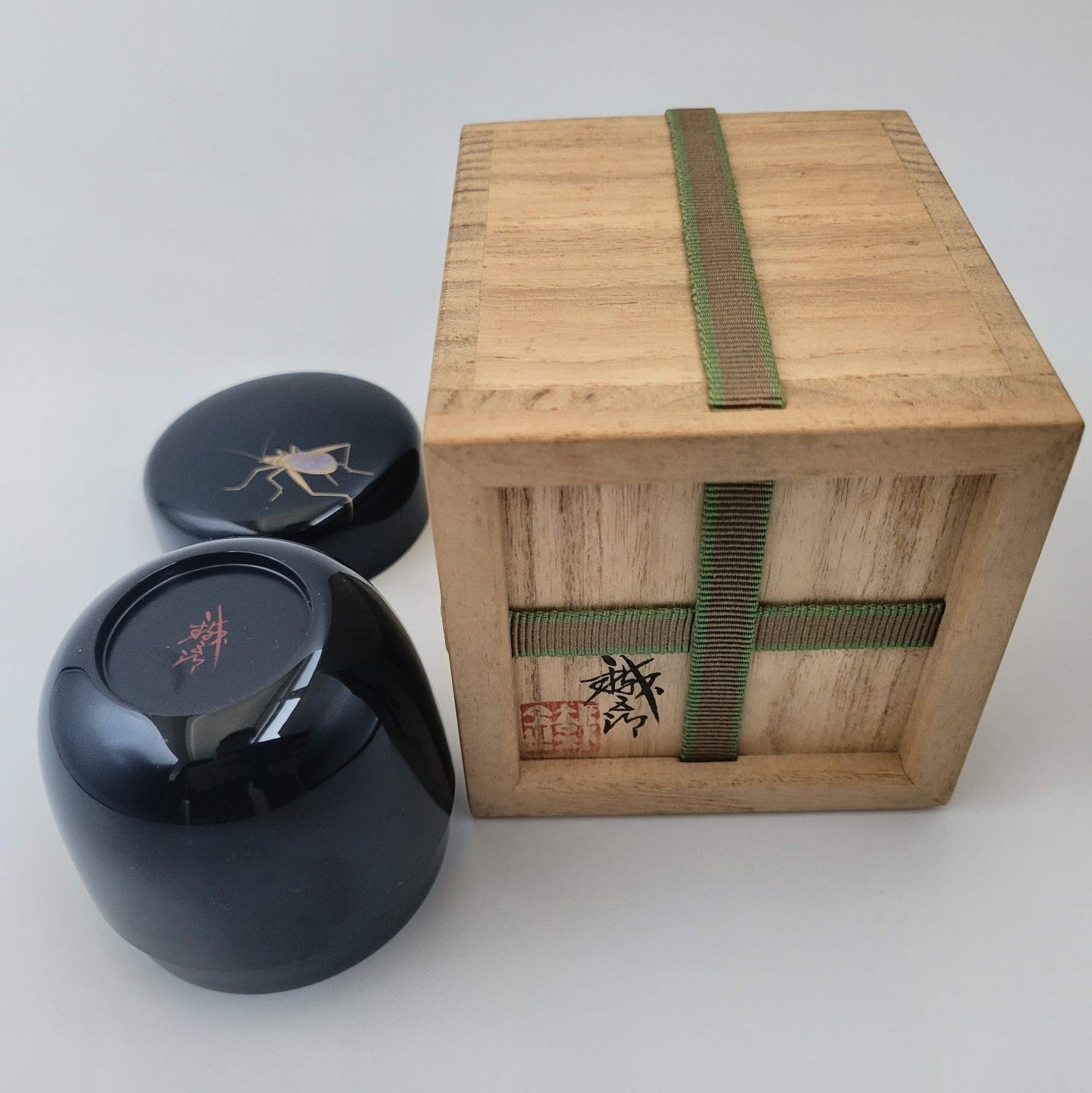
This elegant black urushi natsume is a refined example of Japanese lacquerware within the tea culture, decorated with an understated suzumushi motif—the Japanese “bell cricket”—which is traditionally associated with late summer and the transition into autumn.
Motif
On the deep-gloss black lacquer, a single cricket is depicted, executed in fine gold-colored maki-e. The wings are subtly enriched with a mother-of-pearl effect, giving them nuances of blue, violet, and turquoise depending on the light. This minimalist composition creates a quiet, poetic tension between emptiness and detail.
Seasonal Awareness
The suzumushi holds a special place in Japan within the experience of the seasons. The first singing of the cricket traditionally marks the end of summer as the air turns cooler and nature moves slowly toward autumn. The sound is experienced as soft, soothing, and almost meditative.
During the Heian and Edo periods, suzumushi were even kept in small bamboo cages by nobles and wealthy families, purely to listen to their song on quiet summer evenings. Listening to crickets was considered a sophisticated form of seasonal awareness, comparable to appreciating poetry, incense, or the tea ceremony.
Symbolism
Because the suzumushi lives for only one season and is audible for only a short time, the cricket became a classic symbol of mono no aware—the poignant awareness of impermanence and the beauty of the moment. Within Japanese tea culture, aesthetics are not about abundance but about subtlety, season, and suggestion.
The suzumushi is therefore a beloved motif in chanoyu, not because of its appearance alone, but above all because of the atmosphere it evokes, involving cool evenings, silence, attentiveness, and the awareness that beauty is temporary.
Object Details
- Title: Suzumushi (鈴虫)
- Type: Ōnatsume (large tea caddy for matcha)
- Artist: Suzutani Tetsugorō (鈴谷鉄五郎)
- Motif: Suzumushi, the Japanese bell cricket
- Technique: Maki-e in gold powder with subtle raden on urushi lacquer
- Decoration style: Minimalist
- Material: Wood with deep-black roiro urushi lacquer
- Finish: High-gloss polished lacquer with fine brushwork in gold maki-e
- Color effect: Subtly iridescent effect in the wings (blue, violet, turquoise)
- Diameter: approx. 7 cm
- Height: approx. 7.5 cm
- Period: Late 20th century, Showa to Heisei period
- Origin: Wajima, Ishikawa prefecture, Japan
- Usage: Tea ceremony (chanoyu) and collector’s item
- Condition: Very good
- Special feature: Highly understated, typical of tea ceremonial lacquerware
- Accessories: Original tomobako (wooden storage box) with signature
Tomobako
The tomobako bears the same signature as the natsume and confirms the work of Suzutani Tetsugorō (鈴谷鉄五郎). The style is late 20th-century Japanese Wajima production, likely intended for use within the tea ceremony. The quality of the lacquer, maki-e, and composition clearly places the work above standard everyday pieces.
Signature and Maker
Suzutani Tetsugorō (鈴谷鉄五郎) was a maki-e artist from Wajima in Ishikawa Prefecture, an important center of traditional Japanese lacquerware. Born in 1932 into a family of lacquer workers, he was trained from a young age in the techniques of Wajima-nuri, known for its deep gloss, durable lacquer layers, and refined gold decoration.
From 1946, he studied under the influential master Ichigo Icchō (一后一兆), after which he started his own atelier in 1951. His work developed into a highly refined style in which seasonal atmosphere, silence, and subtlety were central, closely connected to the aesthetics of the Japanese tea ceremony.
His work is characterized by:
- extremely fine maki-e brush lines
- subtle use of gold and silver powder
- minimalist compositions
- poetic nature and seasonal motifs
Unlike richly decorated objects, he consciously chose emptiness and stillness, giving a single detail—such as this solitary cricket—extra power and presence.
Suzutani Tetsugorō was later recognized as a traditional master craftsman (Dento Kōgeishi) and was involved with the Wajima Maki-e Guild. He received various awards from the city of Wajima and Ishikawa Prefecture for his contribution to the preservation of traditional lacquerware.
The suzumushi natsume forms a typical expression of his aesthetic: deep-black roiro lacquer, minimal decoration, and a quiet, seasonal symbolism that is not immediately striking but unfolds slowly, exactly as beauty is experienced within tea culture through attentiveness, silence, and impermanence.
Delen