Matcha shiro-urushi natsume 橋爪庵 Hashizume-an
Matcha shiro-urushi natsume 橋爪庵 Hashizume-an
Couldn't load pickup availability
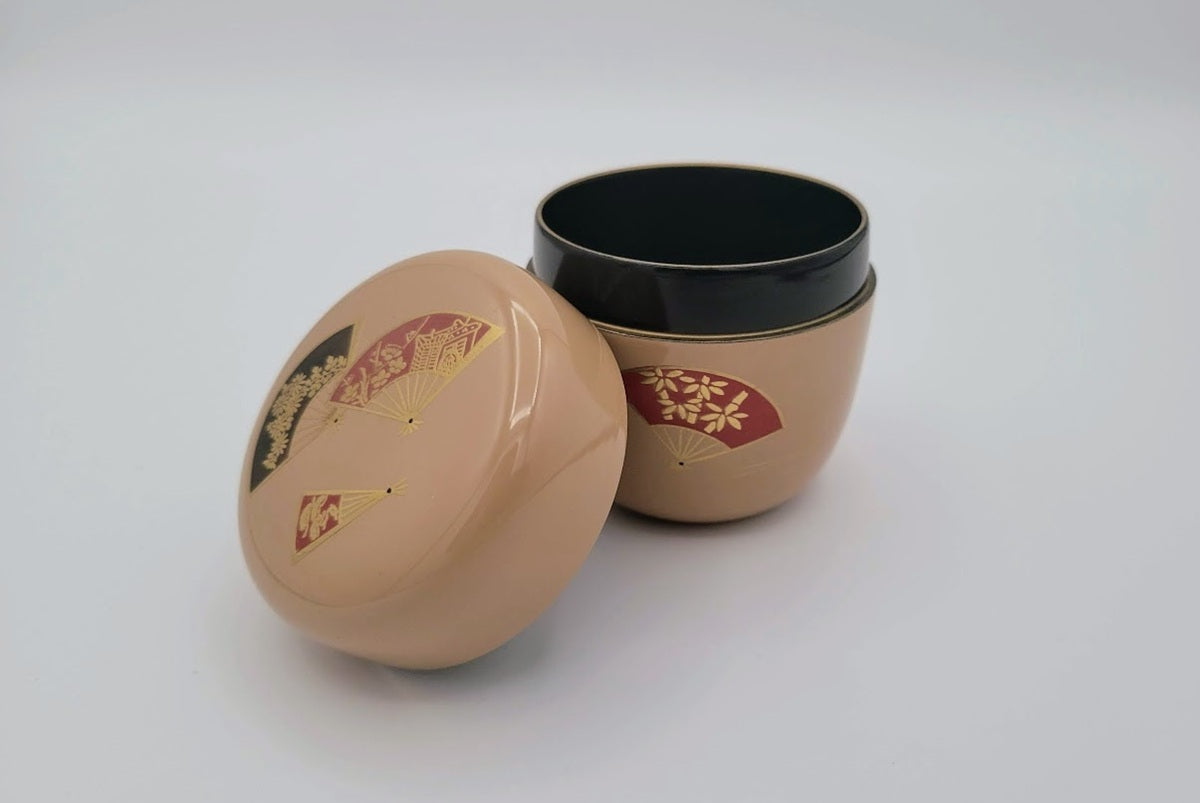
This refined natsume (tea caddy for matcha) originates from Yamanaka Onsen, Kaga (Ishikawa) and is signed on the original wooden box (tomobako) as 「橋爪庵 造」 (made by Hashizume-an), with the corresponding red studio seal (hanko) containing the character 庵. The shape is classic nakatsume, with a medium-height, rounded silhouette that is suitable for use in the Japanese tea ceremony.
The Motif
The natsume is crafted from white urushi (shiro-urushi), featuring a soft, warm luster and a subtly even surface that emphasizes the calm, refined appearance of the lacquer. The surface is decorated with golden and silver fan motifs (senmen maki-e, 扇面蒔絵), incorporating seasonal flowers: plum blossom, orchid, pine, and chrysanthemum. The combination of fan and floral motifs creates a rhythmic and seasonal imagery, where each element forms part of a continuous decorative whole.
Symbolism
The four depicted plants represent the seasons and their corresponding virtues within Japanese aesthetics. Plum blossom (ume) symbolizes resilience and new beginnings, orchid (ran) represents refined elegance, chrysanthemum (kiku) embodies nobility and longevity, and pine (matsu) signifies steadfastness and immortality. Together, they form a harmonious cycle of nature, aligning with the serene and contemplative atmosphere of the tea ceremony.
Shiro-urushi (白漆)
White urushi (shiro-urushi, 白漆) is a rare and technically demanding variant of traditional Japanese lacquer (urushi), where the natural dark resin is blended and pigmented to achieve a light, often ivory to cream-white appearance. Unlike deep black or reddish-brown standard lacquers, shiro-urushi is sensitive to composition, drying conditions, and oxidation, making it particularly difficult to process stably.
Historically, shiro-urushi was primarily used in decorative and ceremonial objects where a light, refined appearance was desired, often in combination with maki-e or other gold and silver accents. The contrast between the light surface and metallic decoration creates a subtle, almost ethereal visual effect.
Object details
- Maker: Hashizume-an (橋爪庵 造)
- Title: Senmen Ichimen (洗面一面)
- Technique: maki-e (扇面蒔絵)
- Material: wood, urushi lacquer
- Diameter: ≈ 6.5 cm
- Height: ≈ 6.6 cm
- Condition: Excellent, undamaged
- Origin: Yamanaka Onsen, Ishikawa Prefecture, Japan
- Dating: ca. 1980–2000
- Accessories: original tomobako (共箱) and cloth (共布)
Tomobako and authenticity
The piece is signed on its original wooden box (tomobako) as 「橋爪庵 造」 (Hashizume-an saku, "made by Hashizume-an") and features a red studio seal (hanko) with the character 庵 (an). The signature is associated with the Hashizume lacquerware family from Kuroe, Kainan (Wakayama), a historic center of Japanese urushi production.
The Hashizume workshop has been active for multiple generations in traditional lacquer techniques, including maki-e, producing both functional and ceremonial objects within Japanese tea culture. In this context, the name "Hashizume-an" is used as a studio or artist name within the family's production practice.
Signature and maker