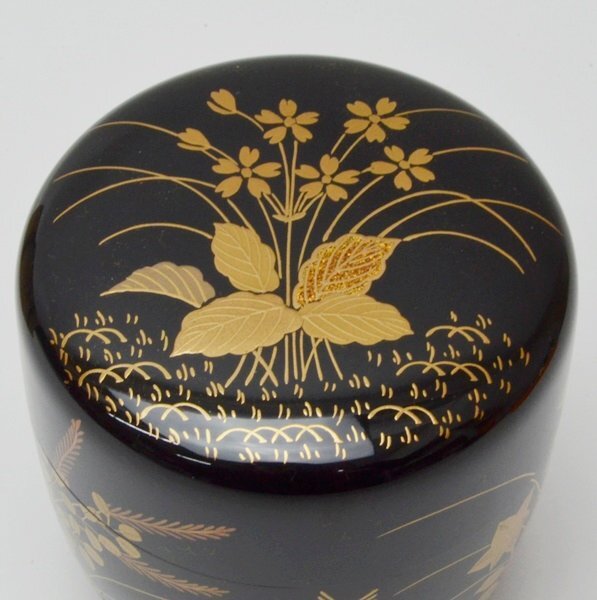
Shiki sōka makie chū-natsume 四季草花蒔絵 Shintani Kiyoshi
Shiki sōka makie chū-natsume 四季草花蒔絵 Shintani Kiyoshi
Couldn't load pickup availability
A delicate medium-sized tea caddy (chū-natsume) from the Yamanaka-nuri (山中塗) lacquerware tradition. This piece was made by Shintani Kiyoshi, better known by his artist name Shippō / Urushihō, a master lacquerworker from Ishikawa Prefecture.
The natsume is crafted in deep black urushi lacquer, with a makie pattern of four seasonal flowers and grasses (Shiki sōka 四季草花蒔絵) in fine gold powder. Every detail reflects the Japanese concept of shun (the beauty of the moment), in which the seasons follow one another in subtle forms. In the context of the tea ceremony (chanoyu), this natsume invites contemplation, a moment on the threshold of time, where simplicity and mindfulness converge. It recalls the fleeting splendor of each season, but also the continuity of nature's rhythm.
- Creator: 新谷清 Shintani Kiyoshi (漆峯 Shippō /Urushihō)
- Born: 1930, Daishōji-machi, Ishikawa
- Teachers1: 中村政吉 (Nakamura Masakichi)
- Teachers2: 中川友助 (Nakagawa Yūsuke)
- Technique: 山中塗 (Yamanaka lacquerware) ・金蒔絵 (gold makie)
- Motif: 四季草花 (flowers and grasses of the four seasons)
- Size: 中棗 (medium) chū-natsume
- Diameter: ≈ 6cm
- Height: ≈ 6.5 cm
- Includes: Original box (箱 /tomobako), signature and seal
- Includes: A silk cloth (仕覆/shifuku) with a seal
- Condition: Very good; signed and complete
Kaga maki-e is a prominent genre within traditional Japanese lacquer art and has long been particularly popular with European collectors.
From the 17th to the 18th century, high-quality maki-e lacquerware from the Kaga and Wajima regions was internationally known as "Japanese lacquerware." Through the trading networks of the Dutch, French, and Portuguese East India Companies, these luxurious lacquer objects were exported to Europe, where they were highly sought after.
Such works were collected by royal families and the aristocracy and adorned the treasuries, art cabinets, and palaces of the European elite. The strong visual contrast of gold and silver motifs glowing against a deep, jet-black lacquer surface was seen as exotic, refined, and technically superior, contributing to the enduring reputation of this craft.
This tradition lives on in the work of skilled lacquer masters like Shintani Kiyoshi, whose objects reflect the classic elegance, balance, and craftsmanship that have made Kaga maki-e famous worldwide.