Shikunshi Maki-e Ōnatsume (Four Gentlemen Maki-e Large Tea Caddy) by Saijō Issai
Shikunshi Maki-e Ōnatsume (Four Gentlemen Maki-e Large Tea Caddy) by Saijō Issai
Couldn't load pickup availability
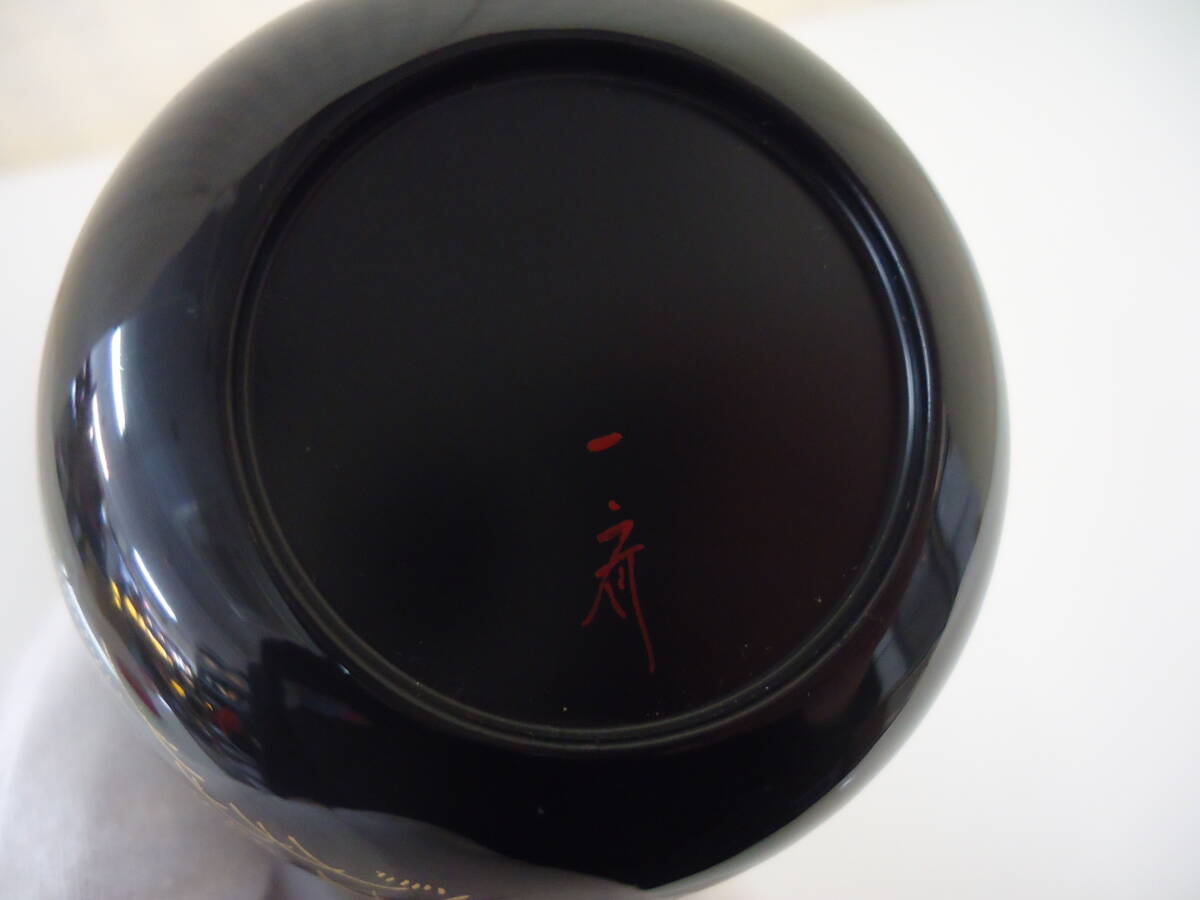
A refined ōnatsume by maki-e master Saijō Issai (西條一斎), executed in gold maki-e on deep black urushi lacquer with raden inlay. This exceptional piece combines classical Japanese tea ceremony aesthetics with the rich symbolism of the Shikunshi. Supplied with the original signed tomobako.
The lid forms the visual centerpiece of the piece, featuring an intricately worked chrysanthemum beneath blossoming plum branches. Among the blossoms are refined round raden accents of inlaid mother-of-pearl, showing a soft iridescent sheen depending on the light. The decoration continues around the body with graceful seasonal plants and landscape elements that give the object movement and depth without disturbing the harmony of the design.
Motif
Shikunshi (四君子) literally means "Four Noble Gentlemen" or "Four Gentlemen." Within Japanese art and literati tradition, this term refers not to people, but to ideal character traits of a cultivated and refined person.
- Plum blossom (ume) — resilience and renewal
- Orchid — refinement and inner purity
- Bamboo — flexibility and steadfastness
- Chrysanthemum (kiku) — dignity and contemplative serenity
Not only beautiful to behold, but also symbolically charged. In the tea ceremony, each motif was consciously chosen to evoke an atmosphere.
Symbolism
A particular feature of the Shikunshi motif is its dual meaning. On the one hand, the plants show the natural cycle of the seasons; on the other hand, they depict inner qualities that were considered ideal within the tradition of scholars, poets, and tea masters. The decoration is therefore not only aesthetic, but also symbolically and philosophically charged.
In Japanese culture, these plants represent the ideal mindset: how a person thinks, feels, and acts from inner values. Blooming in the cold, bending without breaking, fragrant without being conspicuous, remaining dignified when all else withers. Not status, but character is the measure. A natsume with this motif quietly carries that message into the tea room.
Object Details
- Maker: Saijō Issai (西條一斎)
- Title on tomobako: 蒔絵師 / Maki-e master
- Type: Ōnatsume / large tea natsume
- Motif: Shikunshi / Four Noble Gentlemen (四君子)
- Technique: Gold maki-e with raden inlay on black urushi lacquer
- Material: Wood with urushi lacquer
- Height: Approx. 7.5cm, Width: Approx. 7.5cm, Depth: Approx. 7.5cm
- Period: Shōwa period (mid to late 20th century)
- Accessories: Original signed tomobako
- Condition: Very good, slight signs of use and age consistent with age and use
Tomobako
The original signed tomobako (wooden storage box) states 四君子 大棗 Shikunshi Ōnatsume “Large natsume with the Four Noble Gentlemen motif”. Additionally, the box bears the signature: 塗師 西條一斎 Nurishi Saijō Issai “Maki-e master Saijō Issai”. The presence of the original tomobako enhances both the provenance and collectible nature of the object. Within Japanese tea utensils, a signed storage box is an important part of the presentation and documentation of a work.
Signature and maker