Matcha natsume Hana-ikada 花筏 Saijō Issai
Matcha natsume Hana-ikada 花筏 Saijō Issai
Couldn't load pickup availability
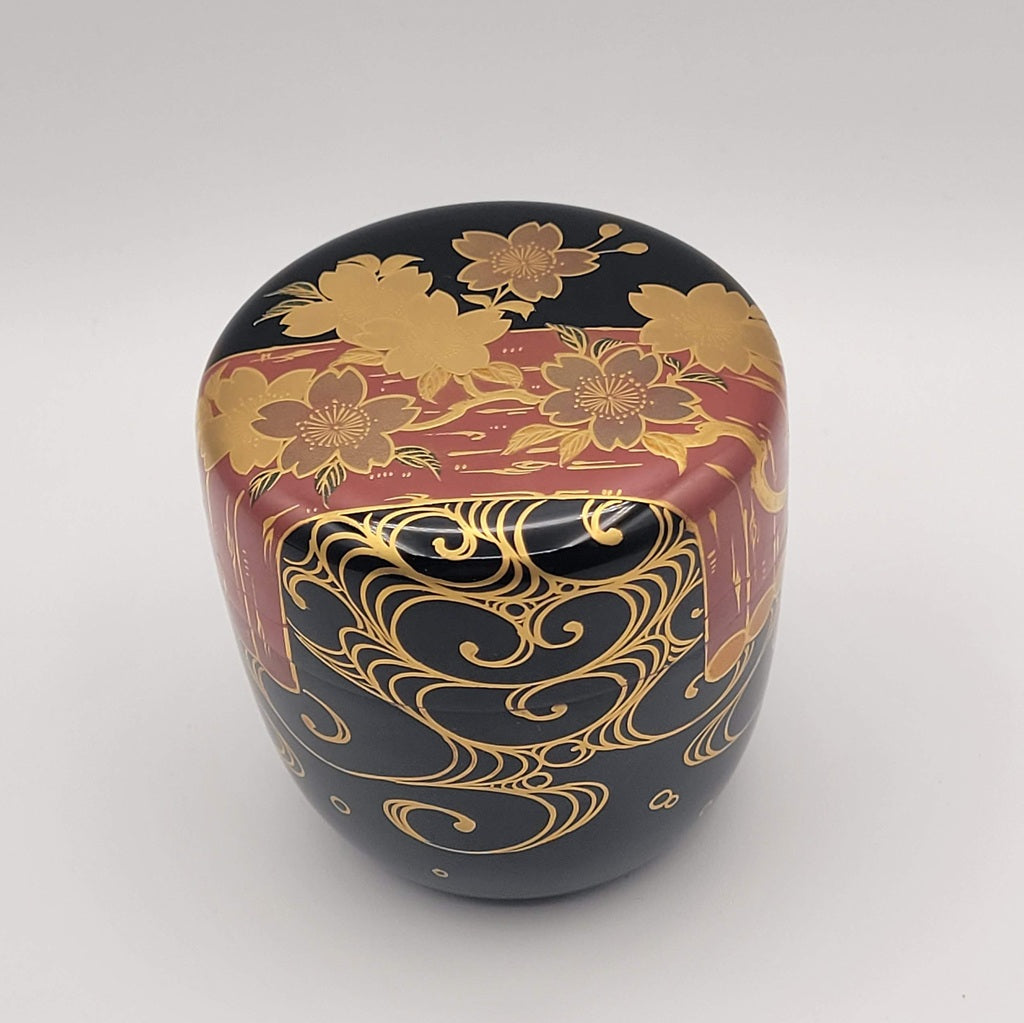
An exceptional ōnatsume (大棗) by the Japanese master lacquer artist Saijō Issai (最上一斎), titled Flower Raft (花筏 / Hana-ikada). The motif depicts cherry blossoms (sakura) gliding across the water like a floating raft, a classic symbol from Japanese poetry that portrays the transience of beauty and the rhythm of the seasons.
Motif
Symbolism
The motif also marks the transition of seasons. In classical poetry, it is considered a spring image that subtly indicates the passage of time. Simultaneously, it evokes a sense of connection: individual petals together form a floating pattern, just as people meet and part again.
Object details
- Maker: Saijō Issai (最上一斎, born 1937, Osaka)
- Title: Flower Raft Ōnatsume (花筏大棗)
- Technique: Maki-e (lacquer decoration with gold powder)
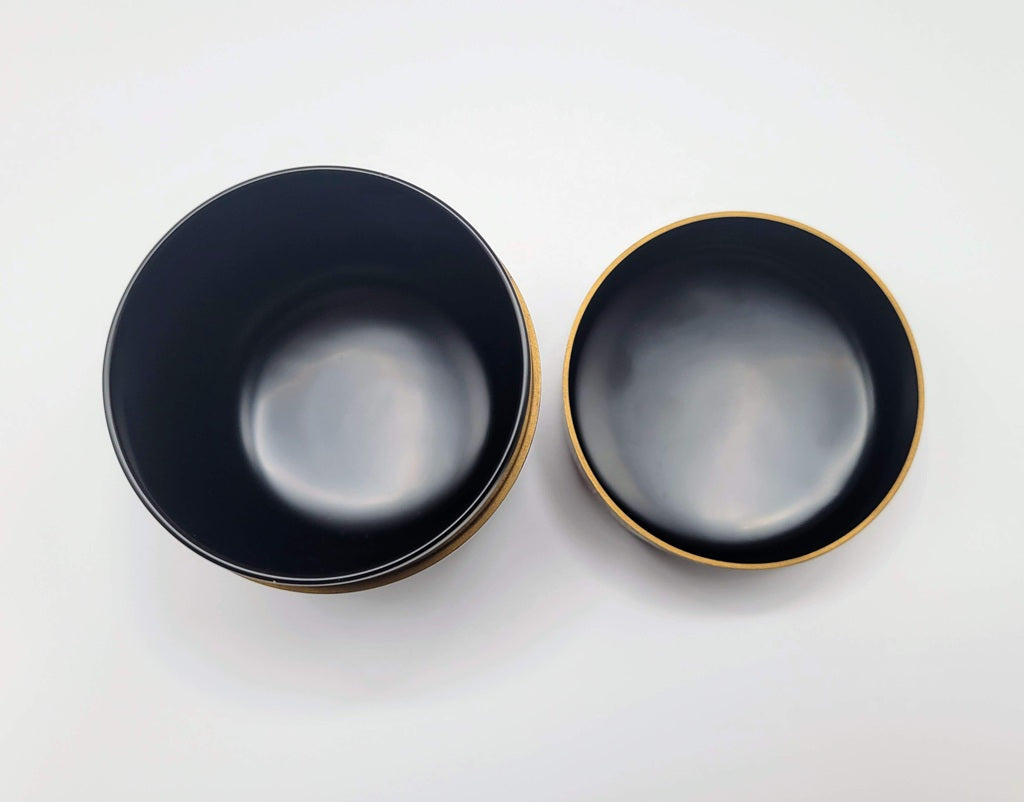
- Material: Lacquered wood (urushi)
- Diameter: ≈ 7 cm
- Height: ≈ 7 cm
- Condition: Excellent.
- Accessories: Original tomobako with inscription 花筏 and Saijō Issai's seal
Signature and maker
Magical spectacle
The floating cherry blossoms on the water come alive in Japan in places where blossoms gather to form a soft, moving carpet. Along the Meguro River, petals glide like a pink river under bridges; at the Chidorigafuchi Moat , an almost picturesque reflection of falling sakura emerges around the Imperial Palace's water; at Hikawa Shrine , blossoms swirl through the serene shrine environment and collect in still pools; and in Kawagoe, with its historic streets and canals, a calmer, almost nostalgic image of hana-ikada unfolds. Everywhere, it revolves around that fleeting moment when the blossoms detach, touch the water, and transform into a living painting, typically in the last week of March to early April in Tokyo and a few days later in Saitama, peaking three to five days after full bloom when falling blossoms set the water's surface in gentle motion.
Share