Japanese tea caddy chazutsu Ōkadō Koto & Chataku made of pure copper
Japanese tea caddy chazutsu Ōkadō Koto & Chataku made of pure copper
Couldn't load pickup availability
A special Japanese tea set by Ōkadō (桜花堂) from the Koto (古都) series. The set is crafted from pure copper and consists of a traditional chazutsu (茶筒) for storing loose tea and matching chataku (茶托), Japanese saucers for tea cups.
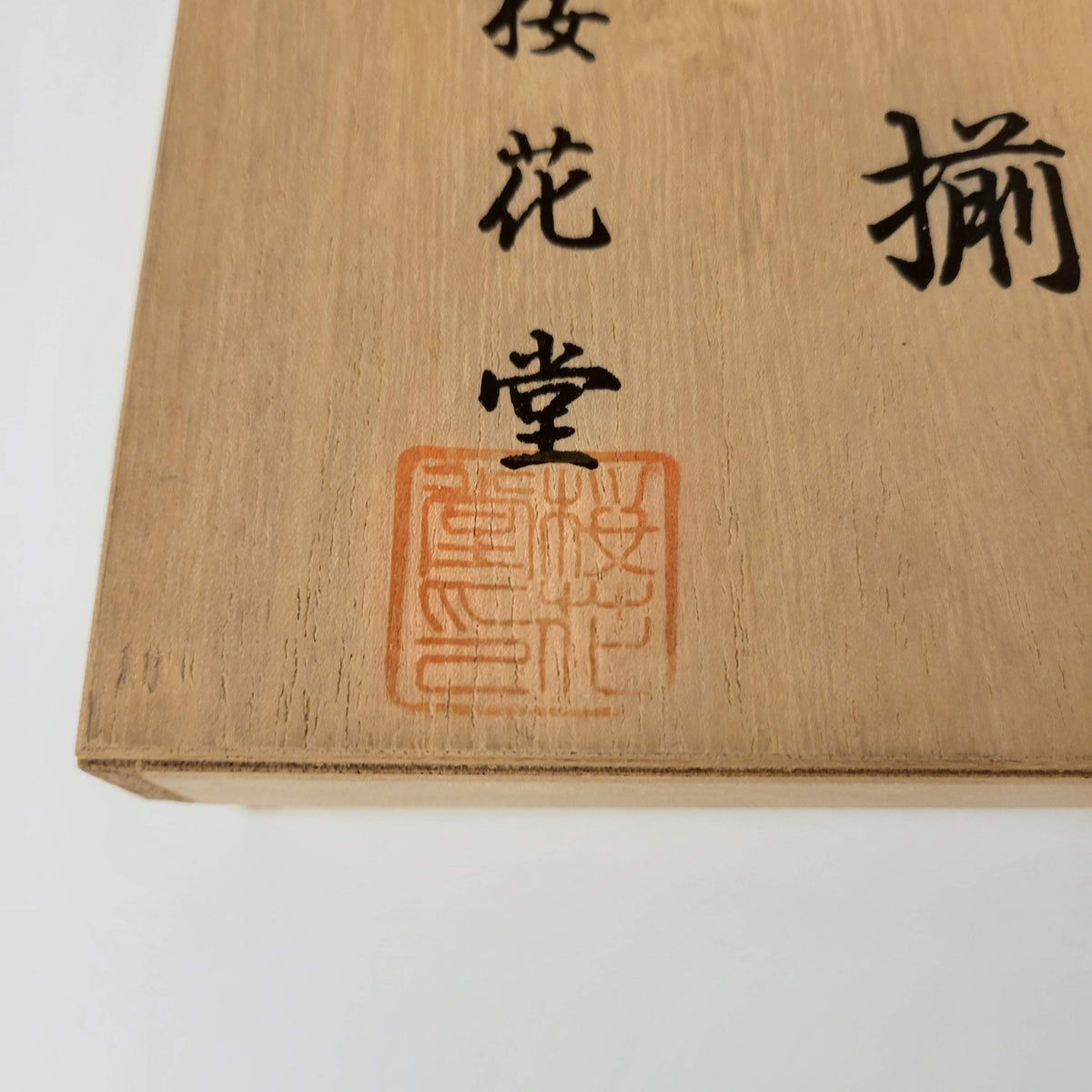
The warm reddish-brown glow of the copper is combined with an understated decor of plum blossom and a bird. The set is unused and has been preserved in its original wooden box, which bears the name, series, material, and composition in Japanese calligraphy.
The chazutsu
A chazutsu is a traditional Japanese storage canister for loose tea. High-quality Japanese tea canisters are designed to protect tea as much as possible from light, air, and moisture. In addition to the outer lid, this copper chazutsu features a separate inner lid. This provides an extra seal and is characteristic of high-quality Japanese tea canisters.
The canister can be used for, for example, sencha, gyokuro, hojicha, or other loose tea. At the same time, because of its decoration and original storage box, this Ōkadō set is an attractive collector's item for enthusiasts of Japanese tea and craftsmanship. Included with the chazutsu are chataku: small Japanese saucers on which a tea cup is placed while serving.
Why copper
Copper has a long history in Japan as a material for both everyday utensils and refined metalwork. The material is durable but is especially valued for the way it ages. New copper has a bright red-orange shine. Under the influence of time, touch, and the environment, the surface gradually changes, creating a deeper patina.
This change is precisely what is valued within Japanese aesthetics. A copper object does not need to remain like new forever: the material is allowed to show that time is passing. For a tea canister, copper also has the advantage of being completely opaque. Light, one of the factors that can diminish the quality of tea, does not reach the tea leaves.
Ume and bird
A subtle scene of a bird among blooming plum branches has been applied to the copper. The Japanese plum blossom, ume (梅), is an important traditional motif. The ume blooms very early in the year, sometimes while it is still cold. As a result, it has become a symbol of perseverance, resilience, hope, and the approaching spring.
The bird reinforces this reference to the new season. Birds and blooming plum branches have appeared together in Japanese painting and decorative arts for centuries. A well-known combination is the ume with the uguisu, or Japanese bush warbler, which is culturally strongly associated with the beginning of spring.
In this piece, however, the bird is depicted in a highly stylized manner. Therefore, we do not attribute it with certainty to a specific bird species. The representation is kept small and is partly integrated into the copper. Because of this, from a distance, the calm form and warm color of the object predominate; up close, the details become visible.
The original wooden box
Special to this set is the original wooden storage box. The calligraphy provides important information about the object. The box includes, among other things:
- 桜花堂 – Ōkadō: The name of the workshop.
- 古都 – Koto: Literally old capital. This appears to be the name of the series or version.
- 茶筒 – Chazutsu: Japanese tea canister.
- 茶托 – Chataku: Tea saucers on which a tea cup is placed.
- 揃 – Soroi: Crafted from pure copper.
At the bottom is also the red seal of Ōkadō. The wooden box is not just packaging, but also forms an important part of the provenance and identification of the set.
Japanese copper craftsmanship
Japan has an exceptionally rich tradition in metalworking. Copper was used for everything from temple fittings and utensils to vases, incense burners, and objects for the Japanese tea ceremony.
With high-quality Japanese copperware, it is not just the form and construction that play a role. Surface treatment and patination are also part of the craft. Through hammering, polishing, engraving, and various finishing techniques, the same metal can take on very different appearances.
Well-known centers of Japanese metal craftsmanship include those around Tsubame-Sanjō in Niigata and Takaoka in Toyama. Tsubame developed into an important center for copper and metalworking, while Takaoka has a centuries-old tradition in cast metalware.
Object details
- Object: Japanese tea set
-
Name/series: Koto 古都
-
Brand/workshop: Ōkadō 桜花堂
-
Origin: Japan
-
Dating: 20th century; exact production date unknown
- Material: pure copper (純銅製)
- Components: chazutsu with inner and outer lids and matching chataku
- Decoration: plum blossom (ume) and bird
- Condition: unused from long-term storage
-
Packaging: original inscribed wooden storage box with red seal
The maker Ōkadō – 桜花堂
Ōkadō (桜花堂), literally ‘House of the Cherry Blossom’, is the Japanese name of the workshop or brand under which this copper tea set was manufactured. In addition to tea canisters, other components for the Japanese tea culture are also known under this name.
Koto (古都) appears on several Ōkadō objects and thus seems to be a series. As of yet, we have not found reliable documentation in which Ōkadō is attributed to one individual copper artist.
We have not been able to conclusively document the exact location and production period. The original box of this example is therefore particularly valuable: it makes the attribution to Ōkadō, the Koto series, and pure copper possible directly from the object itself.
Delen